
Assymetry

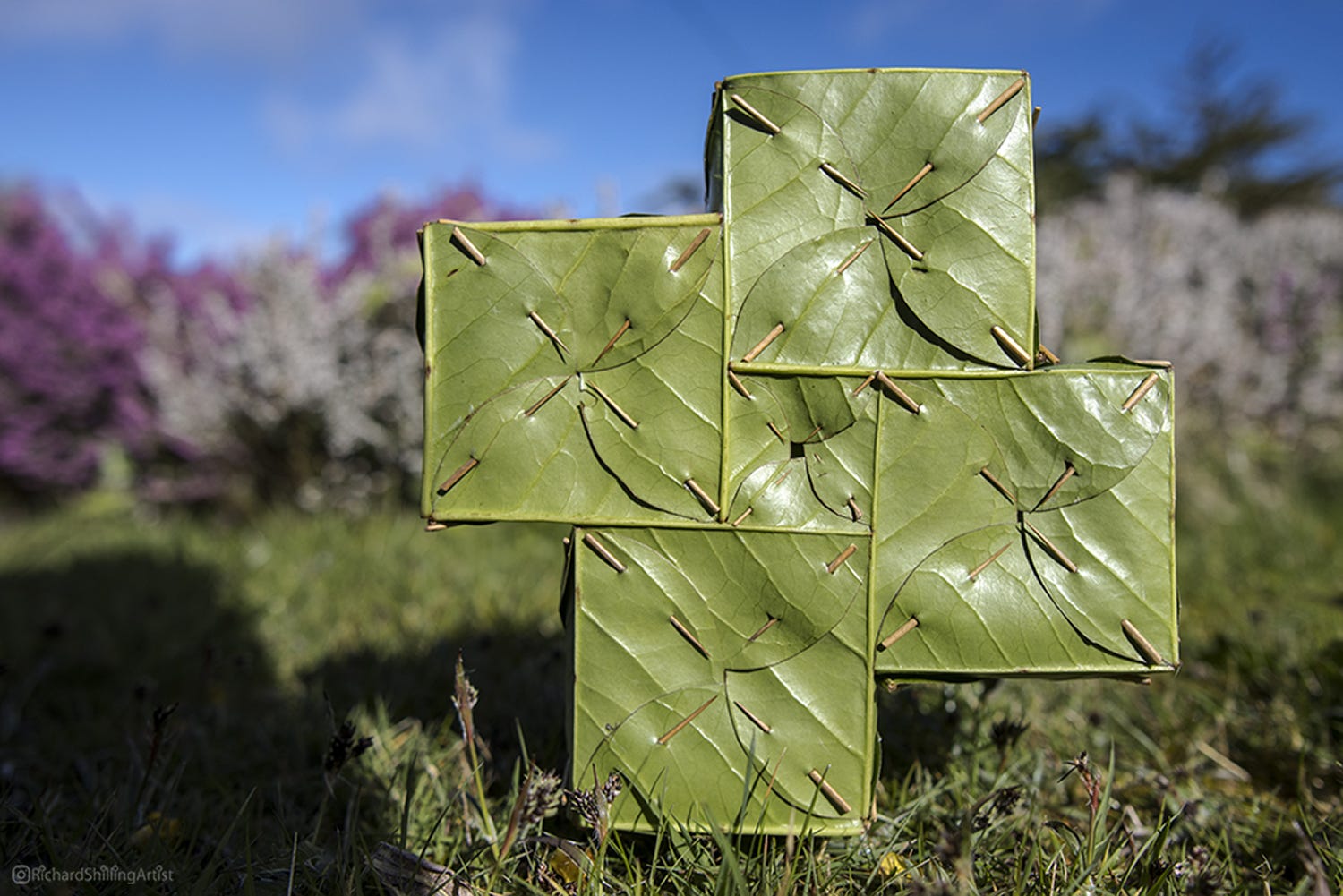
Time to investigate some assymetric patterns.
People keep mentioning some overlap with textile arts, something I know very little about.
I assume, like I’ve been doing with leaves, it involves overlapping pieces and stitching them together.
With my forms this means that they look one way in daylight and different again when backlit and illuminated, revealing stained glass like patterns. And then leaves look and behave differently depending on whether you are using the top or bottom of the leaf.
For example this sculpture is 3D with boxes extending in depth the same as the width but due to the assymetry the backside is the top of the leaf and therefore dark green. And there the central veins don’t bend well in that direction. The central veins bend much better when the bottom of the leaf is on the outside as you can see in this picture. This is something I can remedy in a second attempt by mirroring the shapes I used.
So, as far as I know, there are several different factors which make my leaf art different to textile art including needing to use the central vein as part of the structure, which influences what shapes can be used and how they fit together and with assymetry how the different parts will interact, as well as the huge variance in growing materials and even how single species of leaves vary in different environmental conditions.
This object may look relatively simple but the opportunities for additional understanding in using leaves is quite interesting and hopefully will lead to additional new doors to open.